

.png)




Every day, our skin faces an invisible battle against hundreds of external factors: dust, polluted air particles, excess sebum, makeup residue, and sunscreen traces. We cleanse our faces, apply skincare products, and use different formulas, but we rarely stop to think: what exactly happens during the cleansing process, and what truly remains on the skin’s surface afterward?
Many people choose a cleanser based on its fragrance, texture, or attractive packaging. However, behind every formula lies a sophisticated cosmetic technology that determines how effectively a product interacts with skin impurities. To understand the differences between cleansing products, we need to look at the principles behind their action at a microscopic level — from the interaction of micellar structures and surfactants to the effects of gel-based and toning formulas on the skin.
1. The Invisible Battle on the Skin’s Surface: Which Removes Impurities More Effectively - Micelles or Foaming Formulas?
At first glance, cleansing the skin seems like a simple process: apply a product, rinse it off with water, and you are done. However, the reality is much more complex. The skin’s surface has a sophisticated structure where substances of different origins accumulate simultaneously. Some impurities are water-soluble, while others dissolve in oils. This distinction plays a key role in determining how effective the cleansing process will be.
Imagine a simple example: if your hands are covered only with dust, water is enough to remove it. But if there is grease or oil on your skin, water alone will no longer work. The same principle applies to facial skin - sebum, SPF filters, makeup residues, and urban pollution particles have a different chemical nature and therefore require specialized cleansing mechanisms.
How Micellar Water Works: Cleansing Technology at the Molecular Level
The main secret behind micellar water is micelles. These are unique spherical structures formed by surfactants (surface-active agents).
In simple terms, a micelle has two “sides”:
Hydrophilic part - interacts with water.
Lipophilic part - attracts oil-soluble impurities such as sebum, makeup residue, SPF particles, and dirt.
Thanks to this unique structure, micelles act like tiny “magnets” for impurities. They capture unwanted particles and help remove them from the skin’s surface without the need for aggressive rubbing.
This is one of the main reasons behind the popularity of micellar water: it allows the skin to be cleansed gently while maintaining a comfortable feeling after use.
Foams and Gels: The Power of Foaming vs. Gentle Cleansing
Cleansing foams and gels work according to a different principle. They also contain surfactants, but their main focus is on creating foam and actively removing impurities through interaction with water.
They can be compared to a “deep cleansing” approach: they effectively remove excess sebum, cosmetic residues, and everyday environmental impurities.
However, balance plays a crucial role here.
If a formula removes too many lipids from the skin’s surface, it may affect the skin’s natural protective barrier - the hydrolipidic mantle. This barrier helps retain moisture and allows the skin to maintain a comfortable condition.
That is why some cleansing products may leave familiar sensations such as:
- tightness;
- dryness;
- the need to immediately apply a moisturizer;
- discomfort after washing.
This does not mean that gels or foams are bad products. They simply work differently and require proper selection according to the individual needs and skin type.
Toners: Cleansing or the Final Step of Skincare?
Unlike micellar water, toner is usually not considered the primary product for removing impurities. Its main purpose is to complete the cleansing process and prepare the skin for the application of subsequent skincare products.
Modern toners may contain:
- hydrating ingredients;
- botanical extracts;
- active components that support skin balance;
- ingredients that enhance the feeling of freshness.
In other words, toner is more about maintaining the skin’s condition after cleansing rather than directly removing impurities at the first stage.
Micelles or Foaming Formulas: Which One Wins?
In reality, there is no universal winner. The choice depends on the skin’s needs and individual lifestyle.
Micellar Water:
- suitable for quick and gentle cleansing;
- effectively removes makeup, SPF, and surface impurities;
- comfortable for sensitive skin;
- does not require intensive rubbing.
Foams and Gels:
- work well with excess sebum;
- suitable for deeper cleansing;
- often used in daily routines for combination or oily skin types.
Toners:
- complete the cleansing process;
- help maintain skin comfort;
- prepare the skin for further skincare steps.
Modern cosmetology is gradually moving away from the idea that “the stronger the cleansing, the better” toward a more balanced approach: effectively removing impurities while preserving the skin’s natural protective mechanisms.
2. The Price of Over-Cleansing: What Risks Does Improper Skin Cleansing Hide?
We are used to thinking that clean skin is skin from which absolutely everything has been removed: oil, impurities, makeup residue, and even natural shine. But does that “squeaky clean” feeling always mean that the skin has benefited? In reality, excessive cleansing may hide a problem that is not immediately visible.
The skin is not just a surface that needs to be washed regularly. It is a complex biological system with its own protective mechanisms. On its surface works the hydrolipidic barrier - a thin layer of water and lipids that helps retain moisture, protects against external factors, and supports the stable condition of the epidermis.
When cleansing becomes too aggressive, this delicate balance can be disrupted.
When Does Cleanliness Become a Threat?
Imagine a simple situation: you wash your hands every day with a very strong cleanser until the skin becomes dry and starts to crack. A similar process can happen with facial skin, but the consequences often appear gradually.
Excessive cleansing or an incorrectly selected product may lead to:
- disruption of the skin’s pH balance - the natural equilibrium becomes less stable;
- loss of moisture - causing dryness and a feeling of tightness;
- weakening of the protective barrier - making the skin more sensitive to wind, cold, and environmental pollution;
- increased skin reactivity - even familiar skincare products may cause discomfort.
This issue is especially common among people who strive for a “perfectly clean” complexion and use several cleansing products at the same time: a gel, foam, toner, and scrub. It may seem that such a multi-step routine provides better results, but sometimes the skin receives not more care — but more stress.
The Skin Microbiome: The Invisible Protector Few People Know About
Billions of microorganisms live on the surface of our skin, forming the skin microbiome. It is a natural ecosystem that helps maintain healthy skin function.
Interesting fact: modern cosmetic research is increasingly focused not only on how effectively a product removes impurities, but also on how gently it interacts with the skin’s natural balance.
In other words, the main goal of cleansing is not to “destroy everything,” but to separate what is unnecessary: remove makeup, excess sebum, dust, and polluted air particles while allowing the skin to continue performing its own protective functions.
A Dermatological Case: When the Pursuit of Perfect Cleanliness Became Harmful
Dermatologists around the world have reported cases where patients seek help after unintentionally creating what specialists call a “skin barrier damage cycle.”
For example, in South Korea - a country known for its advanced multi-step skincare culture - dermatologists have repeatedly documented cases of young people using 10–15 skincare products daily. At first, their skin appeared perfectly smooth and flawless, but after several months, signs of irritation began to appear: redness, increased sensitivity, and even a burning sensation when exposed to ordinary water.
Similar situations have also been observed by European specialists. People trying to eliminate oily shine began cleansing their skin several times a day and using strong degreasing products. However, the body responded in the opposite way: due to the loss of natural lipids, sebaceous glands became even more active, attempting to restore the protective layer.
This phenomenon is known as skin barrier disruption - a condition in which the skin’s protective system can no longer effectively perform its function. The skin becomes more vulnerable to irritants, loses moisture faster, and may react even to familiar cosmetic ingredients.
Micellar Water: Cleansing Without Fighting Against the Skin
Behind every effective cleansing product lies a complex system of ingredient interactions that cannot be seen with the naked eye, yet it determines the results the skin experiences after use. Therefore, choosing a daily cleanser is not only a matter of habit but also an understanding of how a formula interacts with the skin.
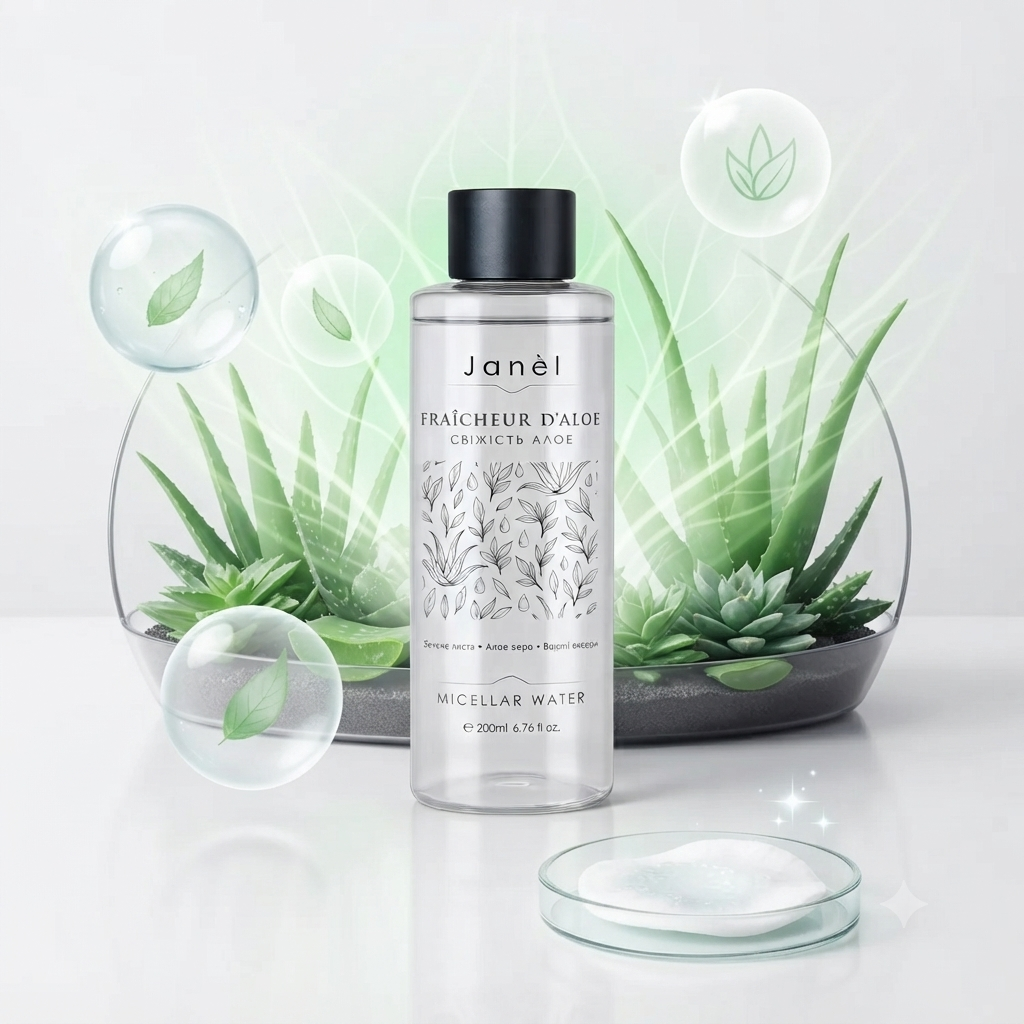
Janel Micellar Water – Fraîcheur d’Aloe (Aloe Freshness) helps capture impurity particles, excess sebum, and makeup residue without creating a feeling of harsh cleansing. Aloe in the formula is associated with a refreshing and comfortable sensation, making this format especially suitable for daily skincare when the goal is not only to cleanse the skin but also to maintain its natural balance.
Ultimately, truly clean skin is not about aggressively removing everything from its surface, but about finding the right balance between effective cleansing and preserving its natural protective mechanisms.
3. Technology of the Future or a Marketing Myth: Does Micellar Water Really Outperform Traditional Cleansers?
Just a few years ago, micellar water was perceived as a new trend in the beauty market, and many considered it simply another marketing innovation. However, behind this appealing name lies not only clever branding but also a sophisticated technology based on the principles of physical chemistry. Today, micellar water has become one of the most discussed cleansing products because it offers a completely different approach: instead of aggressively removing everything from the skin’s surface, it captures impurities while helping maintain the skin’s natural balance.
This is why the popularity of micellar water is not accidental - it reflects a new consumer demand: achieving clean skin without the feeling of harsh treatment or “aggression” toward it.
The Evolution of Cleansing: From Aggression to Precision
Historically, many cleansing products were developed with one main goal: to remove everything unnecessary as quickly as possible — excess oil, impurities, and makeup residue. However, along with unwanted substances, some components essential for skin comfort could also be removed.
Today, the concept of selective cleansing has become increasingly important — a process where a product works specifically with unwanted particles while minimally interfering with the skin’s natural functions.
This principle has become one of the key reasons behind the growing popularity of micellar water.
Imagine a simple situation: you are cleaning a room. You can do it aggressively by removing everything that is on the surface. Or you can use a precise tool that removes only the unnecessary elements while leaving important things untouched. Modern cosmetology is gradually moving toward this exact approach.
Why Is the Future of Skincare Moving Toward Personalization?
One of the main trends in the beauty industry is personalization. In the future, the question will no longer be: “Which product is the best?” but rather: “Which product is the best for my skin specifically?”
After all, even the same person may have different skin needs depending on the season, lifestyle, and environmental factors.
For example:
- After an active day in the city, the skin requires cleansing from dust, pollution particles, and excess sebum.
- After using SPF products or decorative cosmetics, it is important to effectively remove long-lasting ingredients.
- For sensitive skin, the priority is not the strength of cleansing, but the comfort felt afterward.
That is why modern formulas, including micellar products, are developed with attention not only to cleansing effectiveness but also to how they interact with the skin.
Micellar Water: A Revolution or Successful Marketing?
There are many debates surrounding micellar water. Some consider it a revolutionary breakthrough in skincare, while others see it as nothing more than an attractive marketing concept.
The truth lies somewhere in between.
Micellar water is not a “miracle product” that completely replaces every step of a skincare routine. However, it has become an important example of how science can help create more comfortable and skin-friendly formulas for everyday use.
The Future of Cleansing: Not Stronger, but Smarter
The main transformation expected in the cosmetics industry is the shift away from the idea of “maximum cleansing” toward the concept of “smart cleansing.”
The skin does not need constant battle. It needs the right balance.
Therefore, the future does not belong to one specific product, but to technologies that help us better understand skin needs and create skincare solutions adapted to each individual.
Because true innovation in cosmetology is not simply a new product on a shelf - it is a formula that changes the way we understand and approach daily skincare.